
About GHD
A family enterprise built on circular economies
Global Holdings and Development, LLC is a family-owned sustainability enterprise founded in 2010, with a long-term mission: to create circular economies in North America.
What we will do for you
GHD is your strategic partner to stave off competitors, differentiate your products, and win contracts. Our supply chain is your sustainable competitive advantage. Your company can depend on high-volume, high-quality recycled PET resin delivered to your door every day of the week.
We have developed more than twenty post-consumer and post-industrial PET resin production and distribution programs, with a total annual production capacity of 100,000,000 pounds per year. Our programs supply high-quality rPET resin to projects of every size, from small-volume initiatives to multibillion-dollar food package manufacturers in North America.
Our work enables consumer product groups, restaurant chains, fast food companies, and grocers to reach their Environmental, Social, and Governance initiatives.
From feedstock to the finish line
Four disciplines, one integrated scope of work.
Raw material management
Securing and managing post-consumer and post-industrial PET feedstock at industrial volume.
Equipment finance
Financing structures for the processing equipment that recycling programs depend on.
Training
Operational training so every program meets food-grade quality standards.
Sales & distribution
Placing finished rPET with manufacturers through just-in-time delivery programs.
Headquarters: Fort Lauderdale, Florida, United States.
Subsidiary: GHD Américas y Socios Ambiental, S de RL de CV, headquartered in Querétaro, México.
Two bases, one integrated North American supply network.
Where we operate
Beyond recycling: an integrated circular platform
GHD's next chapter goes past recycling alone: an integrated circular-economy platform that collects, processes, converts, and creates value from waste.
Pellet production
Expanding GHD's own food-grade rPET pelletizing capacity.
Waste-to-energy
Converting to energy the waste that cannot become packaging again.
AI-driven predictability
Artificial intelligence applied to supply predictability, from collection to delivery.
Global circular infrastructure
Circular-economy infrastructure designed to scale beyond North America.
Pellet production
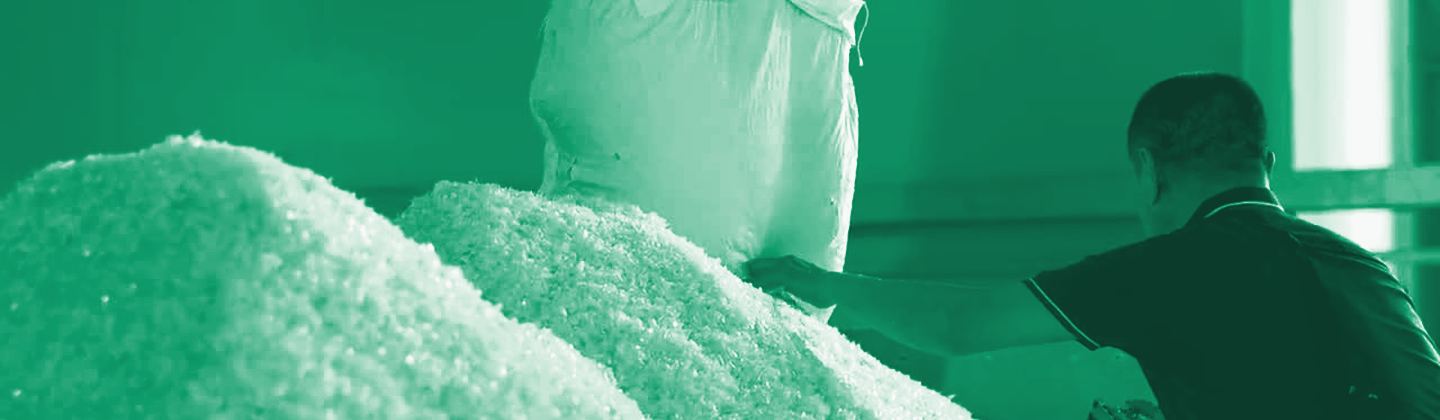
GHD already supplies pellet through AlphaCL PLUS. The expansion track is capacity: bringing more food-grade rPET pelletizing in-house, so that more of the line's output ships in the form converters feed directly into extrusion and injection.
Pelletizing is where recycled PET recovers its full engineering value. Extrusion shears the polymer and lowers its intrinsic viscosity; the industry's answer, solid-state polycondensation, rebuilds chain length below the melting point while stripping volatile contaminants. Owning that step means controlling the IV, the decontamination, and the delivery schedule in one place.
What it means
- More of the Alpha line delivered extrusion-ready, at the IV the application requires.
- Quality control of the final pelletizing step inside GHD's own supply chain.
- Status: expansion track of GHD's integrated circular platform.
Context: solid-state polycondensation restores rPET intrinsic viscosity for bottle-to-bottle use (industry process literature).
Waste-to-energy
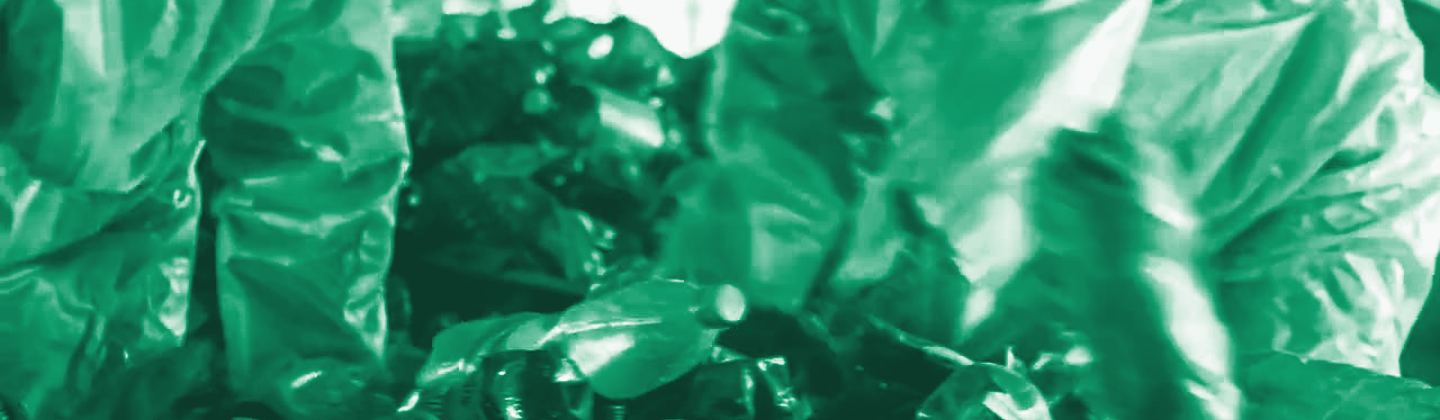
Recycling has a residue: films, composites, and degraded fractions that cannot become packaging again. The waste-to-energy track converts that remainder into usable heat and electricity instead of sending it to landfill.
In the US EPA's waste-management hierarchy, energy recovery ranks below recycling and reuse but above treatment and disposal: the correct destination for what recycling cannot capture. A typical waste-to-energy facility recovers on the order of 550 kilowatt-hours per ton of waste processed. For a circular platform, it closes the accounting: material first, energy second, landfill last.
What it means
- Applies only to fractions that can no longer be recycled into packaging.
- Recovers heat and electricity that offset fossil-based generation.
- Status: expansion track of GHD's integrated circular platform.
Context: US EPA, Energy Recovery from the Combustion of Municipal Solid Waste.
AI-driven predictability
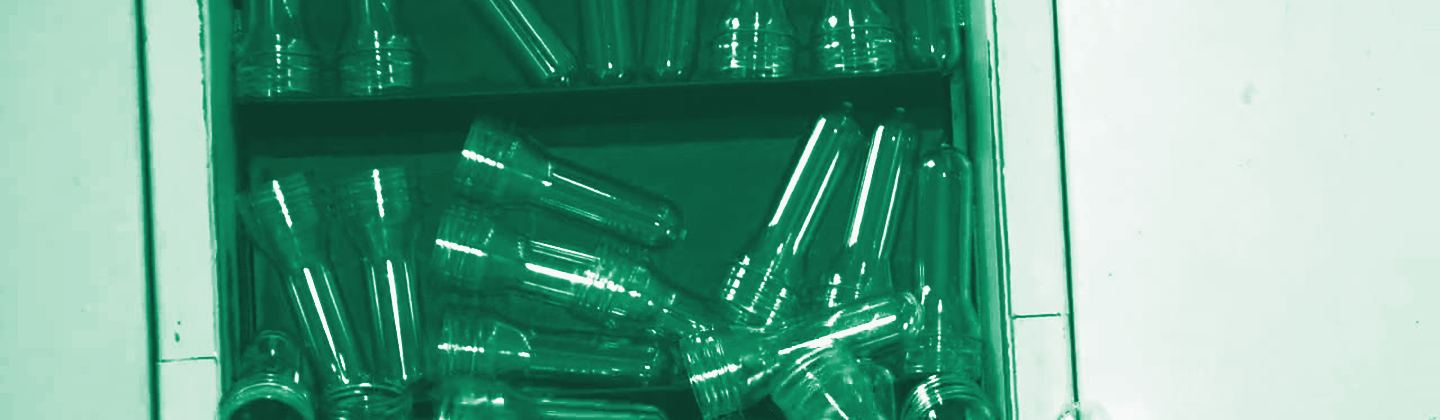
Just-in-time supply lives or dies on predictability. This expansion track applies artificial intelligence across the chain GHD already runs: forecasting collection volumes, anticipating quality variation in incoming material, and timing deliveries against each customer's production schedule.
The goal is not automation for its own sake. Recycled feedstock is inherently more variable than virgin resin; the discipline that makes it dependable is information. The more precisely supply can be predicted, the less inventory the system carries and the closer the platform gets to true just-in-time circularity.
What it means
- Forecasting from collection through processing to delivery.
- Less buffer inventory and tighter delivery windows for manufacturers.
- Status: expansion track of GHD's integrated circular platform.
Context: GHD's stated vision for AI-driven supply predictability.

Global circular infrastructure
The platform is already binational: headquartered in Fort Lauderdale, Florida, with GHD Américas y Socios Ambiental, S de RL de CV operating from Querétaro, México. The expansion track extends that footprint: circular-economy infrastructure designed from the start to scale beyond North America.
This site operates in English, Spanish, and Portuguese for the same reason: the circular economy of the Americas is one market with three languages. Infrastructure that collects, processes, and converts material follows the same logic wherever bottles are consumed, and GHD's model is built to travel.
What it means
- Anchored today in Fort Lauderdale, Florida and Querétaro, México.
- Designed to replicate collection, processing, and conversion beyond North America.
- Status: expansion track of GHD's integrated circular platform.
Context: GHD corporate structure and stated expansion vision.
Raw material management
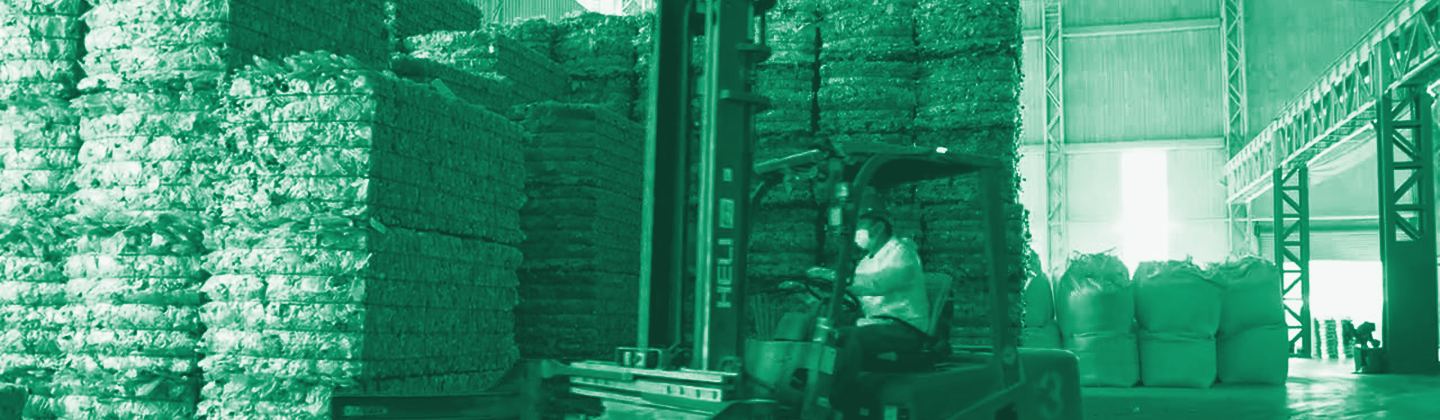
Every food-grade program starts upstream. GHD sources post-consumer bottle bales and post-industrial PET from collection systems across the Americas and manages that feedstock as an industrial input: specified, inspected and scheduled, not bought lot by lot. That discipline is what lets more than 80 million pounds of food-grade flake move each year without quality surprises at the converter's door.
Feedstock consistency decides everything downstream. Bottle-only streams keep AlphaCL and AlphaGR within their food-contact specifications; thermoform and like-kind post-industrial material is routed to AlphaSHCL rather than blended in. Managing the raw material means managing those boundaries, contract by contract.
How it works
- Feedstock specified by source stream (bottle, thermoform, post-industrial), not by lot.
- Volume commitments matched to the 20-plus production and distribution programs GHD operates.
- Traceability from bale to flake, the backbone of the SuperGreen platform.
Basis: GHD program facts published on this site (80,000,000+ lbs/yr of food-grade flake; 20+ programs; grade feedstock definitions).

Equipment finance
Recycling capacity is capital-intensive: wash lines, optical sorters, extruders and solid-state polycondensation units cost far more than the operators who need them can usually finance alone. GHD structures financing for the processing equipment its programs depend on, so a partner facility can add or upgrade capacity against the supply program that will run on it.
The logic is circular in the financial sense too. Equipment financed into a program produces the material that program has already committed to place, which is what makes the structure workable for both sides.
What it means
- Capacity added where the supply program needs it, not where capital happens to sit.
- Equipment tied to a specified output: food-grade flake, regrind or pellet.
- Structures agreed program by program; the terms follow the offtake.
Basis: GHD program model as published on this site; equipment classes per the standard PET reclamation process.
Training
Food-grade recycled PET is a process discipline before it is a product. An FDA Letter of No Objection covers a specific recycling process, so the plant floor has to run that process the same way every shift: sorting, hot washing, decontamination, moisture and metal control, documentation.
GHD trains program operators to that standard, so every program in its network produces material to the same specifications regardless of where the line runs. Consistent training is what lets a distributed network deliver one quality.
How it works
- Process training aligned to the specification of each Alpha grade: intrinsic viscosity, bulk density, moisture, metal content.
- Quality-control routines so output holds to food-grade limits shift after shift.
- Documentation practice that keeps traceability intact for the SuperGreen platform.
Basis: the FDA no-objection review is process-specific (public FDA guidance); grade specifications from GHD's technical data sheets.
Sales & distribution
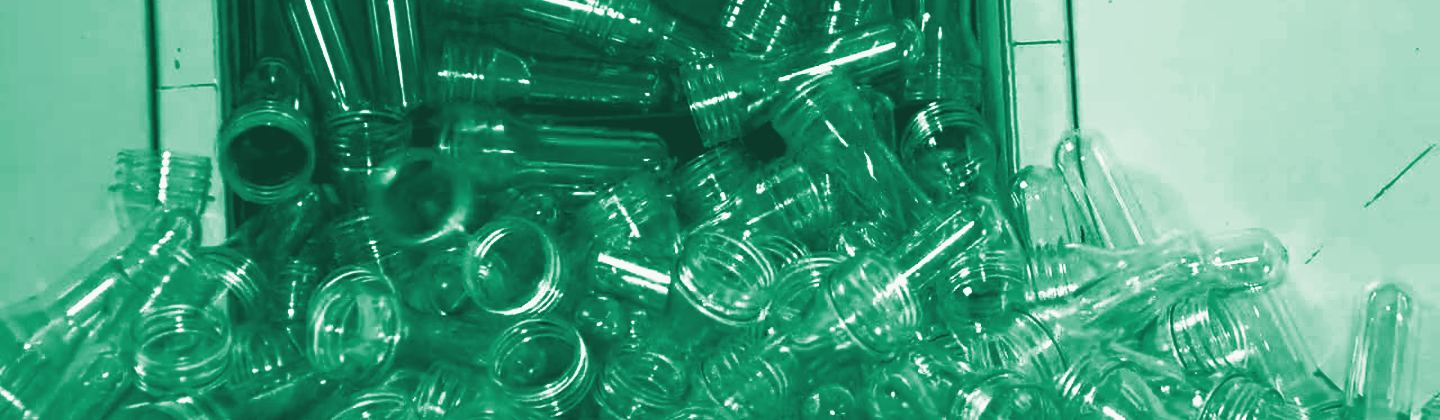
The last discipline closes the loop. GHD places finished rPET flake, regrind and pellet with converters and brand owners through just-in-time delivery programs: palletized supersacks arriving on the schedule the production line runs, not when a spot lot happens to clear.
Just-in-time supply is what turns recycled content from an occasional purchase into a planned input. It is also why GHD carries distribution capacity of 100 million pounds a year across its programs, so that commitments to manufacturers hold even when collection volumes move.
What it means
- Supply contracts written to the manufacturer's production calendar.
- Delivery in 24 to 26 palletized supersacks per shipment, as the Alpha data sheets specify.
- Food-grade documentation travels with every load.
Basis: GHD program facts published on this site (100,000,000 lbs/yr capacity; just-in-time programs); supply format from GHD's 2020 technical data sheets.